The Raptormaniacs Tumblr
In an effort to make myself do more with my web comic thing, I present my new extension of it, the Raptormaniacs Tumblr askblog, where readers can send in questions for the comic characters. This format has several benefits over my previous convention, such as the fact that I probably won't have to use as many panels most of the time. I don't plan on crossposting every individual Tumblr post I make to this blog, but I will post "Tumblr roundups" here once a given number of posts has been put up or a given amount of time passed.
I get fanart again!
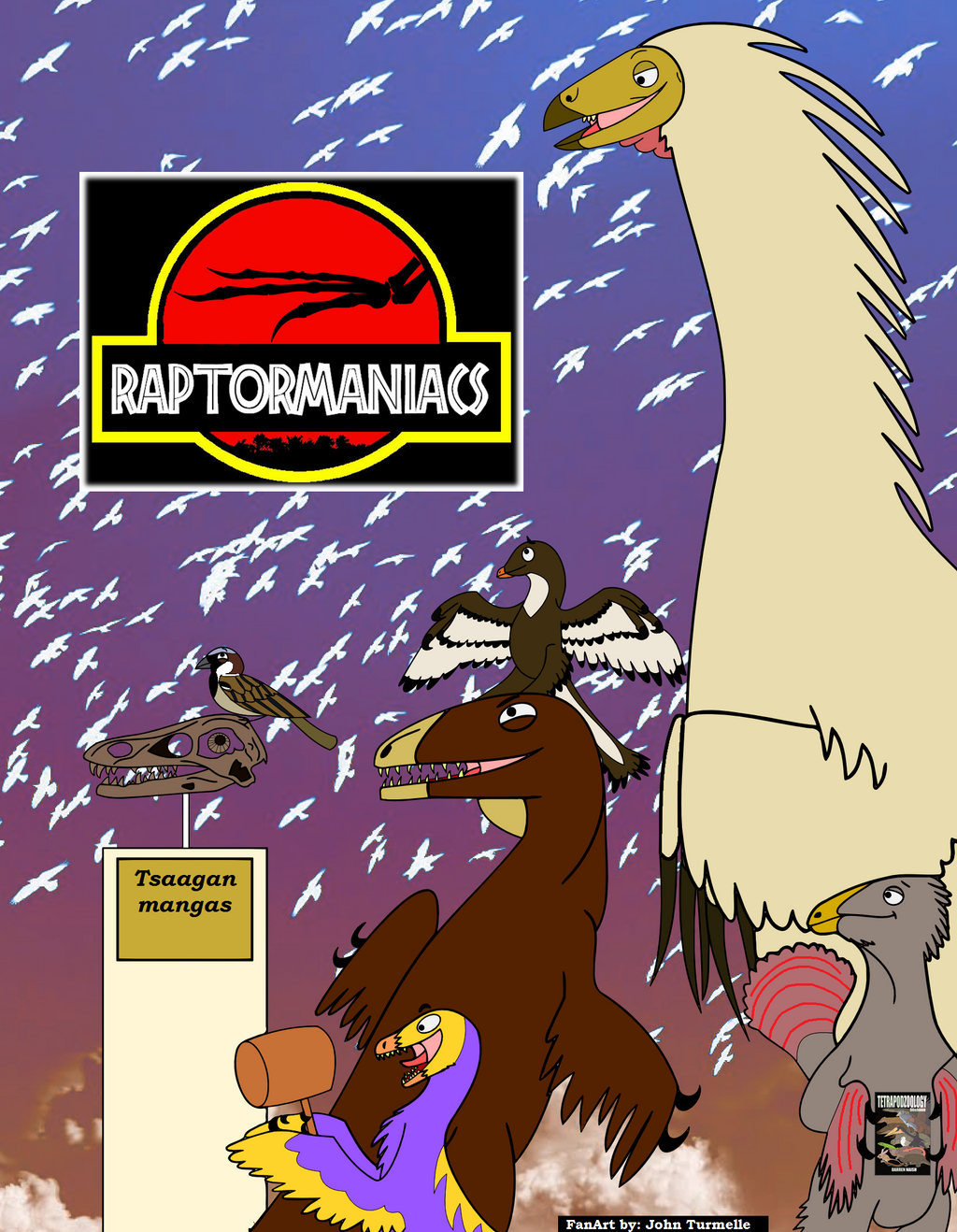
The above is courtesy of John Turmelle, also known as classicalguy on DeviantArt, who, in addition to producing this artwork, said a lot of kind words about my comic/blog/thingamabob in his artist's comments. I love it. I love that Remex is holding Tet Zoo the book, I love Zahavi maniacally holding a mallet, I love Skull being Skull. Words cannot express how happy and astounded I am that there are people who like Raptormaniacs this much, so I'll just provide a .gif instead. (I'd link to a clip of that scene but I can't find one on YouTube.)
Oh yes, I hinted earlier that I'd be making another announcement about the comics soon. Fear not; it really is coming. I just need to get something else that I've been working on out of the way first.
Daily QiGong and Chinese Medicine Improves Health Says Alternative Medicine Pioneer
"The daily practice of QiGong and other Chinese Medicine techniques, according to Dr. Effie Chow during an interview on the Sharon Kleyne Hour Radio Show, can improve health and reduce the need for medication and surgery. Dr. Chow is a pioneer in Alternative Medicine who advocates the integration of some elements of traditional Chinese medicine into modern Western medical practices. Dr. Chow served on the commission that helped established the Institute for Alternative Medicine at the National Institutes of Health.

In her San Francisco clinic, the East-West Academy of Healing Arts, Dr. Chow has witnessed dramatic improvement in diseases such as macular degeneration, cataracts, nearsightedness, diabetes, heart disease and cancer."
I use Qi Gong as part of LifeRcise daily to great effect sepecially the Ma'at pose for opening the spine and helping to minimize spinal stenousus..
'via Blog this'
Daily QiGong and Chinese Medicine Improves Health Says Alternative Medicine Pioneer:
In her San Francisco clinic, the East-West Academy of Healing Arts, Dr. Chow has witnessed dramatic improvement in diseases such as macular degeneration, cataracts, nearsightedness, diabetes, heart disease and cancer."
I use Qi Gong as part of LifeRcise daily to great effect sepecially the Ma'at pose for opening the spine and helping to minimize spinal stenousus..
'via Blog this'
Daily QiGong and Chinese Medicine Improves Health Says Alternative Medicine Pioneer:
Raptormaniacs Revamp (For Real)
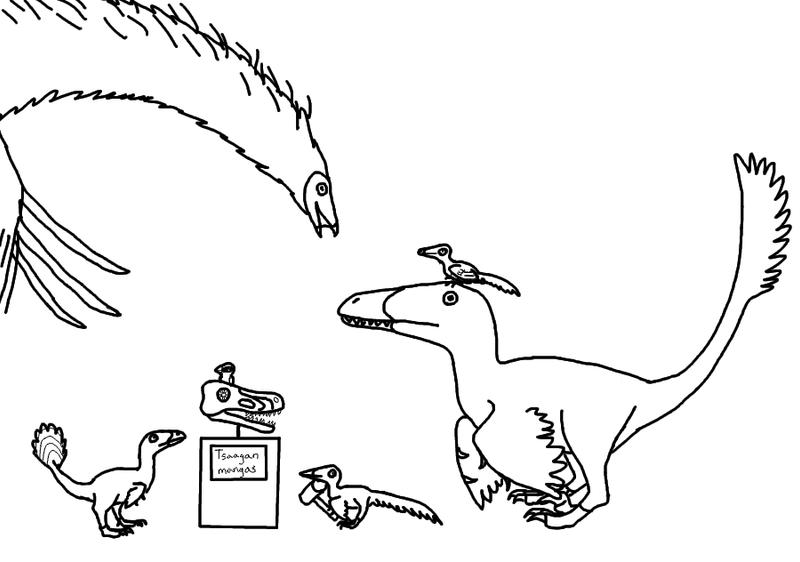
At long last I have come around to revisit the original reason I started this blog to begin with: the Raptormaniacs web comic. It's been more than a year since I last drew a real comic for the blog and much has changed since then. I started dabbling in digital art, for one thing. For another, there have been new scientific discoveries that have made my character designs outdated. All that called for something of a makeover.
For the sake of trivia, have a quick list of the major changes I made.
-I've had readers tell me that they've had trouble differentiating between Savape and Zahavi. In hindsight it was extremely foolish of me to have two "archaeopterygid"-type main characters in the comic and for a long time I'd wanted to either put up a guide to distinguishing the two or have Zahavi transform into a larger troodont in-universe to eliminate the problem. (He has unlimited cartoon powers; he can do that kind of thing.) In the meantime though, paleontology came to the rescue. New analysis of Archaeopteryx feathers show that they had black leading edges. Although an earlier study already demonstrated that the original Archaeopteryx specimen, an isolated covert feather, was dark colored, I had been reluctant to include this in the comic for fear that it would quickly wear down my pencils. Switching to digital art removes the dilemma. Savape's new color patterns are not easy to see at the resolution of the new dramatis personae above, but with luck she should be less mistakable when she shows up in future comics. While we're at it, I gave Remex his tail bands too.
-Feathers extend down to the foot in all the characters (besides Skull and Dinky for obvious reasons) now, based on new Mesozoic avialan specimens showing the ubiquity of foot feathers in Mesozoic theropods. (There's something I wasn't kidding about!)
-Ebeff now has pennibrachiae (wings), based on new evidence of them being present in (adult) ornithomimosaurs, suggesting a wider phylogenetic bracket for them.
-A number of aesthetic choices, such as smoothing the body contours of most of the characters (based on the concept that "primitive"-looking body feathers on fossil dinosaur specimens may be taphonomic illusions) and making their hands and upper legs more obscured by feathers (because there's no reason to think they didn't work like living birds in that respect).
Can I guarantee that I'll post comics more frequently now? Simply put, no. However, I might do an experiment that may help me in doing so, to be revealed shortly.
Asahiyama Zoo
I really need to be better about keeping promises regarding posts I'm going to write... or stop making promises altogether. Have a bit of fresh material for now and maybe one day I'll get around to one of those reviews or months-ago trips I keep talking about.
Earlier this month I got to visit the Asahiyama Zoo, one of the most popular zoos in Japan. It is also the country's northernmost zoo, being situated in Hokkaido. While many of the exhibits were smaller than I'm used to seeing*, its animals looked healthy and were often provided with many sources of enrichment. In fact, the zoo is well known (at least within the country) for its exhibit designs that stimulate natural behaviors in its animals.
*As I once read someone joke, you could fit the entire Asahiyama Zoo into one exhibit at the San Diego Zoo.
Not all of the exhibit signs had English translations, but based on my limited knowledge of Japanese I think this is a black kite. (Thank goodness for my field guide to Japanese birds, which contained the Japanese names of the species it covered.) Black kites are common in Japan and I saw many wild individuals over the course of my vacation (including at the zoo), often mobbed by the even more ubiquitous jungle crows. While we're on the subject, jungle crows are the size of small common ravens and have even thicker bills; imagine those foraging in your neighborhood.

Capybaras lounging around. Capybaras always appear rather chill to me, but it was a hot day when I visited so they were probably trying to be especially so by cooling off in the water. It appears that these rodents are quite popular in Japan, for I saw plushie capybaras at many of the shops I visited.


Up above, spider monkeys clambered about on one of those enrichment structures I hinted at earlier.

Nearby were a series of enclosures for other monkeys (and ring-tailed lemurs). Note the presence of the primate keeper on this dramatis personae.

A eastern black-and-white colobus or mantled guereza.

A pair of De Brazza's monkeys.

A muntjac deer. Though among the smallest deer, the males have formidable-looking canines.

Some gibbons. They were sheltering in the shade when I initially arrived, but I did see them brachiating later on. I regret not taking more pictures of the enrichment structures, because some of them were rather elaborate. The nearby orangutans even had a veritable jungle gym that spanned a large wall as well as a suspended walkway that allowed them to venture beyond their main enclosures (similar to, though much smaller than, the O-Line at the National Zoo).

A wapiti.

A Japanese crane. It's hard to see here, but it'd just pulled a dead fish out of the pond in its exhibit and was adjusting it for ease of swallowing. I would see wild Japanese cranes (though protected by caging) later on during my vacation.

A local Japanese toad species in the reptile and amphibian house.

I don't know why these mice were being exhibited in the reptile house, though my personal suspicions are that they are fed to snakes. Speaking of the snakes, there was a sign at the building entrance warning visitors about snake droppings. Turns out they had a mesh tunnel overhead that allowed snakes to cross from one enclosure to another across the hallway.

An American alligator.

The next part of the zoo I went to exhibited local animals of Hokkaido. I often enjoy this sort of exhibition, for although they may contain species that locals find mundane, said species are often rare in foreign institutions. In this case, there were many owls on display, though the mesh cages made them hard to photograph. Here's an eagle owl.

This is some species of scops owl if I remember right.

A magnificent Steller's sea eagle. Though I said earlier that most of the enclosures at the Asahiyama Zoo were comparatively small, those of the large raptors were larger than what I've seen at many other zoos, which was nice. It's hard not to marvel at wild raptors and remember that captive individuals often have little room to fly even though flight is such a big part of their lifestyles in the wild. (Granted, in some instances the individuals have been rendered permanently flightless by injuries.)

A great spotted woodpecker. One of those species that's probably not too eyecatching to locals, but certainly new for a North American like me.

A Siberian chipmunk, the only chipmunk found outside of North America.

Raccoon dogs, unusual canids strongly featured in Japanese culture. (Yes, I did see statues of well-endowed raccoon dogs in front of Japanese shops on my trip.) How unusual are they? They hibernate and climb trees!

A red fox. Another species I would later see wild individuals of.

Elsewhere in the zoo, the polar bear enclosure, which surrounded a building with multiple viewing windows, including one designed so you can pretend to be a seal popping up from a breathing hole in what is presumably your final moments.

Unexpectedly, there were some fish exhibited in the polar bear building. They didn't come with English signs and my knowledge of fish is sketchy at best, but I think this is a clingfish.

Some lumpsuckers.

Uh... maybe a wolffish?

Some African crested porcupines.

A Blakiston's fish owl, one of Tet Zoo's ten most beautifully interesting birds. Like the sea eagles, it had a generously large exhibit with a small pond presumably for it to fish from.

Earlier this month I got to visit the Asahiyama Zoo, one of the most popular zoos in Japan. It is also the country's northernmost zoo, being situated in Hokkaido. While many of the exhibits were smaller than I'm used to seeing*, its animals looked healthy and were often provided with many sources of enrichment. In fact, the zoo is well known (at least within the country) for its exhibit designs that stimulate natural behaviors in its animals.
*As I once read someone joke, you could fit the entire Asahiyama Zoo into one exhibit at the San Diego Zoo.
Not all of the exhibit signs had English translations, but based on my limited knowledge of Japanese I think this is a black kite. (Thank goodness for my field guide to Japanese birds, which contained the Japanese names of the species it covered.) Black kites are common in Japan and I saw many wild individuals over the course of my vacation (including at the zoo), often mobbed by the even more ubiquitous jungle crows. While we're on the subject, jungle crows are the size of small common ravens and have even thicker bills; imagine those foraging in your neighborhood.

Capybaras lounging around. Capybaras always appear rather chill to me, but it was a hot day when I visited so they were probably trying to be especially so by cooling off in the water. It appears that these rodents are quite popular in Japan, for I saw plushie capybaras at many of the shops I visited.


Up above, spider monkeys clambered about on one of those enrichment structures I hinted at earlier.

Nearby were a series of enclosures for other monkeys (and ring-tailed lemurs). Note the presence of the primate keeper on this dramatis personae.

A eastern black-and-white colobus or mantled guereza.

A pair of De Brazza's monkeys.

A muntjac deer. Though among the smallest deer, the males have formidable-looking canines.

Some gibbons. They were sheltering in the shade when I initially arrived, but I did see them brachiating later on. I regret not taking more pictures of the enrichment structures, because some of them were rather elaborate. The nearby orangutans even had a veritable jungle gym that spanned a large wall as well as a suspended walkway that allowed them to venture beyond their main enclosures (similar to, though much smaller than, the O-Line at the National Zoo).

A wapiti.

A Japanese crane. It's hard to see here, but it'd just pulled a dead fish out of the pond in its exhibit and was adjusting it for ease of swallowing. I would see wild Japanese cranes (though protected by caging) later on during my vacation.

A local Japanese toad species in the reptile and amphibian house.

I don't know why these mice were being exhibited in the reptile house, though my personal suspicions are that they are fed to snakes. Speaking of the snakes, there was a sign at the building entrance warning visitors about snake droppings. Turns out they had a mesh tunnel overhead that allowed snakes to cross from one enclosure to another across the hallway.

An American alligator.

The next part of the zoo I went to exhibited local animals of Hokkaido. I often enjoy this sort of exhibition, for although they may contain species that locals find mundane, said species are often rare in foreign institutions. In this case, there were many owls on display, though the mesh cages made them hard to photograph. Here's an eagle owl.

This is some species of scops owl if I remember right.

A magnificent Steller's sea eagle. Though I said earlier that most of the enclosures at the Asahiyama Zoo were comparatively small, those of the large raptors were larger than what I've seen at many other zoos, which was nice. It's hard not to marvel at wild raptors and remember that captive individuals often have little room to fly even though flight is such a big part of their lifestyles in the wild. (Granted, in some instances the individuals have been rendered permanently flightless by injuries.)

A great spotted woodpecker. One of those species that's probably not too eyecatching to locals, but certainly new for a North American like me.

A Siberian chipmunk, the only chipmunk found outside of North America.

Raccoon dogs, unusual canids strongly featured in Japanese culture. (Yes, I did see statues of well-endowed raccoon dogs in front of Japanese shops on my trip.) How unusual are they? They hibernate and climb trees!

A red fox. Another species I would later see wild individuals of.

Elsewhere in the zoo, the polar bear enclosure, which surrounded a building with multiple viewing windows, including one designed so you can pretend to be a seal popping up from a breathing hole in what is presumably your final moments.

Unexpectedly, there were some fish exhibited in the polar bear building. They didn't come with English signs and my knowledge of fish is sketchy at best, but I think this is a clingfish.

Some lumpsuckers.

Uh... maybe a wolffish?

Some African crested porcupines.

A Blakiston's fish owl, one of Tet Zoo's ten most beautifully interesting birds. Like the sea eagles, it had a generously large exhibit with a small pond presumably for it to fish from.

Iphone is the Best Tool For the Blind
This is a remarkable disability community technology story as told by a blind person. Iphone VoiceOver" "A liberating experience.

I have a family member who has cerebral palsy, she is not blind but the Iphone has changed her life, reading the web was a challenge the Iphone made it a piece of cake like reading a book. The great Steve Job's invention has done a lot of visible revolutionary things for man kind. But I think it is the mostly invisible things it has done in the disability community that are the most revolutionary.
If the Iphone clone folks like droid want to copy something VoiceOver is something that might help balance their moral orientation if not their innovation. Windows 8 is not just a clone and they have always supported the disability community back in their hay day. I look forward to good things mobile Windows 8 as it starts up.
I have a family member who has cerebral palsy, she is not blind but the Iphone has changed her life, reading the web was a challenge the Iphone made it a piece of cake like reading a book. The great Steve Job's invention has done a lot of visible revolutionary things for man kind. But I think it is the mostly invisible things it has done in the disability community that are the most revolutionary.
If the Iphone clone folks like droid want to copy something VoiceOver is something that might help balance their moral orientation if not their innovation. Windows 8 is not just a clone and they have always supported the disability community back in their hay day. I look forward to good things mobile Windows 8 as it starts up.
Even in Death an Apple is worth more then a Droid. SOLD: Apple 1 $671,400
One of what's thought to be only six working Apple 1 computers -- hand-built by Steve Wozniak -- flies out of a German auction house for a tidy sum. The last one went for $640,000

It is interesting to note that no droid anything is worth what an apple is worth. Microsoft's Windows Apple clones thought they won the PC wars against Apple, they were wrong. PC sales down, Ipad sales up. Tomorrow you will not be able to find a PC as everyone has Ipads.
Today Iphone clone's (the google drone mob lead by the foreign Samsung) thinks they can win against the gold standard Iphone ecosystem, they are also in error.
I remember this machine what a revolutionary beauty. It is marvolus to see this "A" Team spirit still alive at the great Job's apple. I can't wait for the June/July WWDC IOS 7 and other announcements. It was this machine that lest to the medical health break through apps I have on my Iphone like, hart rate monitors, Istethoscope with it's EKG graph, the first diabetes app to check a person's blood, Iphone comparable weight and blood pressure products and much more.
So speaking of investments that might be worth real money in one's retirement, even a dead Apple is worth more then a live droid, where is my, still working, Apple Newton.
Long Live the, still working, Apple 1
Amen!
Apple 1 breaks auction record, goes for $671,400 | Apple - CNET News:
'via Blog this'
Jeptoo of Kenya wins women’s Boston Marathon 2013
Even as she led the women’s Boston Marathon for mile upon mile with nary another female runner in sight, Ana Dulce Felix kept looking over her shoulder.

Turns out she was wise to be on the lookout. Because Rita Jeptoo was closer than she appeared."
Lelisa Desisa, a 23-year-old Ethiopian who won then men's but the woman had the dramatic story, Rita Jeptooo Kenya won the woman's Boston coming from behind. I can't wait to see them in my home town New York City for the Big One.
'via Blog this'
Rita Jeptoo of Kenya wins women’s elite race at Boston Marathon; Shalane Flanagan fourth - Marathon - Boston.com:
Subscribe to:
Posts (Atom)