Milk and Honey: Benefits for Health


The health benefits of milk and honey, and a simple recipe to
use at home.

1.      Milk and
honey is a popular home remedy and can be used to treat a variety of different
health problems

2.      Research
has shown that when these two ingredients are mixed together they are more
powerful for treating staph infections than when taken alone.

3.      The mixture
destroys harmful bacteria in the body which helps to cure the common cold and
viral infections.

4.      Honey is a
rich source of prebiotics. These cause your body to produce healthy bacteria in
the digestive system.

This strengthens your immune system, yet also gets rid
of intestinal problems such as constipation, indigestion, cramps and
flatulence.

How to make this health tonic

You Will Need

250ml Skimmed Cow’s milk
1 Tablespoon Organic Raw Honey

Method

Add these ingredients to a glass and stir well. Be
sure to use organic raw honey, as regular honey contains unhealthy syrup and
additives.

Drink this in the morning to boost your health, or an
hour before bed to improve your sleep patterns.

5.      The
tryptophan found in the milk works well with the nutrients in the honey to
produce a relaxing night’s sleep.  Those
who suffer with insomnia may find this extremely useful, as the honey also
regulates insulin and the production of serotonin in the brain.

6.      This
mixture also brings in some wonderful nutrients which are beneficial to your
body. It contains healthy doses of Calcium, Vitamin B2, B6, B12 Thiamine,
Niacin, Riboflavin, Pantothenic Acid, Copper, Iron, Magnesium, Manganese,
Phosphorus, Potassium, Sodium and Zinc.

7.      These
minerals and vitamins help the body to metabolise cholesterol, lowering the
risk of obesity and heart problems.  Honey also helps the body to absorb more
calcium from the milk.

8.      The honey
and milk mixture offers some fantastic benefits for the skin. They can be
applied directly to the skin using a cotton pad to moisturise and regenerate
damaged skin cells.

9.      The
antioxidants found within the raw honey eliminate free radicals from the body
and can keep the eyes healthy later in life. This also has an anti-aging
effect, preventing the early onset of wrinkles.

10.  If you
decide to drink this in the morning, you will notice you have more stamina
throughout the day. The proteins and carbohydrates stimulate the metabolism to
release more energy from the foods you eat.

11.  The honey
allows the calcium from the milk to absorb into the bones. This promotes
stronger and healthier bones, reducing problems such as osteoporosis and joint
inflammation as we get older.

12.  You can
also mix the honey with full fat milk and use as a hair repair tonic. Warm this
mixture and pour over the hair. Let this sit for an hour before washing with a
gentle shampoo. This will produce a healthy shine and softness.

SVP 2017

Another SVP has come and gone, this time slightly earlier in the year than we're accustomed to. This year's meeting took place in Calgary and, as one might expect, its location provided many exciting field trip opportunities. Exciting enough, in fact, to entice me into joining an SVP field trip for the first time. I chose the trip going to the Royal Tyrrell Museum, which deserves a post all on its own. Having been on my bucket list for a long while, the Tyrrell proved more than worth the visit, though it was at the cost of missing out on an alternate field trip that included a visit to the type locality of Albertonykus (as more than one participant on that other trip was eager to inform me afterward).

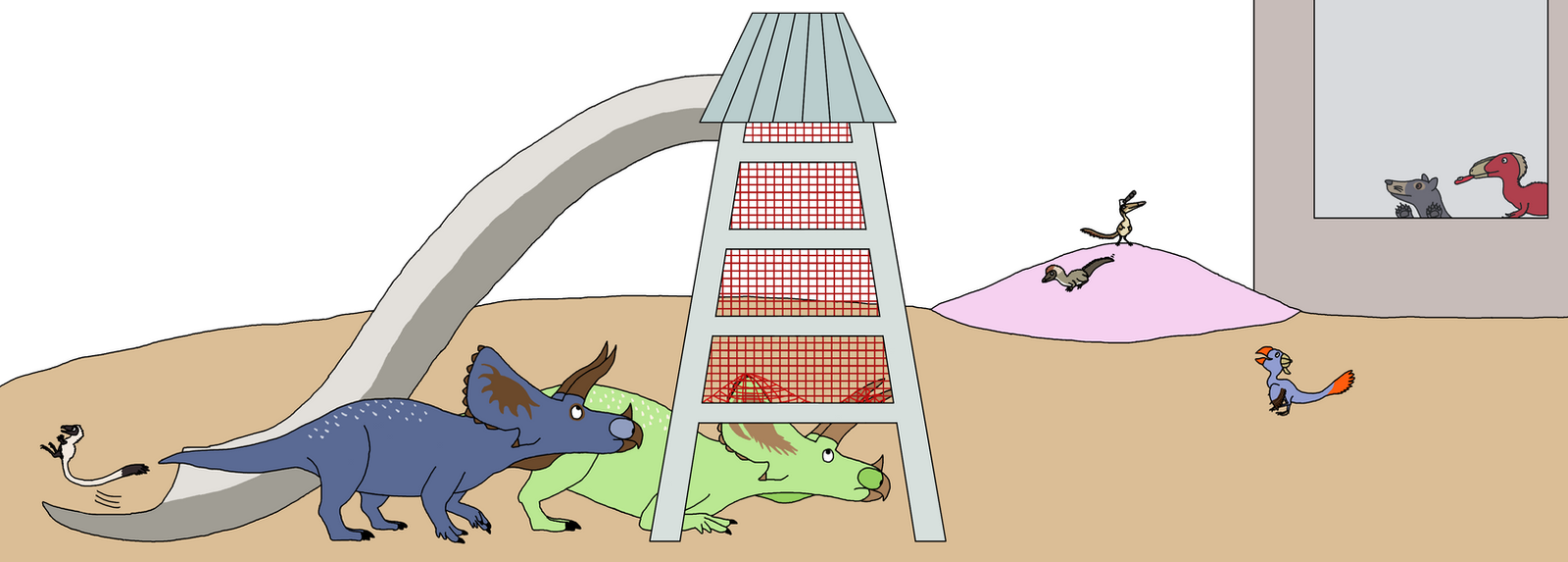
The day after the Tyrrell field trip, the conference proper began in earnest. The welcome reception that evening took place at the Telus Spark science museum. Many of the conference-goers (including some of my associates) were particularly taken by the museum's playground.

Fun on the playground at the SVP welcome reception. Individuals represented are Tristan Stock (Leaellynasaura), Arthur Jarrett Brown (blue Triceratops), Bobby Ebelhar (green Triceratops), Meig Dickson (Kulindadromeus), myself (Albertonykus), Austin Deans (Machairasaurus), Tut Tran (Amphicyon), and Kevin Sievers ("Diplotomodon").

The playground was a nice diversion, but the meat of the conference was of course the presentations. I didn't have anything to present this year, given that my recent research has been focused on invertebrates, so I was free to focus on what everyone else was saying. Some of my favorite presentations included (in order of delivery):

  • Igor Schneider's talk on limb regeneration as an ancestral trait of osteichthyans
  • Ashley Heers's talk on the wing stroke of Archaeopteryx
  • Yara Haridy's talk on ontogenetic tooth migration and tooth loss in Opisthodontosaurus
  • Shuo Wang's talk on ontogenetic tooth loss in theropods (it's not just Limusaurus)
  • Bhart-Anjan Bhullar's talk on evolution and development of the avian beak
  • Grace Musser's talk on the phylogenetic position of Aptornis
  • Alexis Mychajliw's talk on Caribbean Holocene extinctions and solenodon conservation
  • Derek Larson's talk on reconstructing diet in Mesozoic coelurosaurs
  • Aaron LeBlanc's talk on the evolution of mammalian tooth attachment (which deservedly went on to win the Romer Prize)
  • Daniel Field's talk on the selective extinction of arboreal birds during the K-Pg
  • Mike Habib's talk on the aerodynamic function of azhdarchid heads
  • Pete Makovicky's talk on a new specimen of Alnashetri
  • Scott Hartman's talk on "Lori" the Morrison troodont
  • Angelica Torices's talk on inferring theropod feeding strategies through their tooth denticles
  • Ali Nabavizadeh's talk on ornithischian jaw musculature
  • Ross MacPhee's talk on inferring sloth phylogeny through proteomics
  • Alex Hastings's poster on paleontological accuracy in comic books

With honorable mentions to Evan Saitta's talk on recreating Jehol-style preservation in the lab and Fiann Smithwick's talk on evidence of countershading in Sinosauropteryx. (As a student at Bristol, I'd already seen earlier versions of these talks and thus was not as surprised by them as I otherwise might have been.)

In addition to disseminating cutting-edge science, perhaps the most important role of academic conferences is providing the opportunity to socialize and network. Some memorable moments:

  • I must give special thanks to my future PhD supervisor, Daniel Field, for actively going around and introducing me to many of the researchers working in paleornithology, as well as inviting me to their "paleornithology dinner". Never in my wildest dreams did I expect to be sitting at the same dinner table as Jacques Gauthier and Xu Xing at this conference.
  • Among the individuals Field introduced me to was Nick Longrich. Having met Phil Currie at my first SVP, I have now met both describers of Albertonykus! I didn't get to talk to Longrich for long, but, considering where I'm going for my PhD, I have a feeling I'll be seeing him often enough in the future...
  • Brian Choo lived up to his old nickname of Ozgod (from the days of the Speculative Dinosaur Project) by using his divine powers to show up out of nowhere right when I was trying to remember whether current consensus favored the "inside-out" or "outside-in" model for tooth origins. (Apparently, outside-in.)
  • On the last day of the conference, I got to meet Scott Potter, known in the online paleontology community as the creator of the Thagomizers YouTube channel. Longtime readers of this blog may remember that he was responsible for the first ever Raptormaniacs fan art!
  • Though it didn't directly involve me, seeing Pascal Godefroit meet Meig Dickson's plush Kulindadromeus (custom-made by Sam Stanton) was a fantastic moment.

Also worthy of mention was the annual SVP auction. I did attend the auction last year, but had been unable to get a good seat and ended up leaving partway through. This time, I managed to secure much better seating. I avoided bidding on anything myself (as a grad student, I don't exactly have much in the way of disposable income), but the proceedings were plenty entertaining in and of themselves, one notable example (among many) being the bidding for an Anomalocaris plush.

As usual, the auction had a theme: this year, the hosts dressed up as the Guardians of the Galaxy. Special props to the person who played Yondu, who did an incredible job. He made good use of the character's most memorable quotes and quirks, and remained in-character throughout. (A small snippet of his performance, his self introduction, can be seen here.) Unfortunately, I didn't know/recognize who he was. Someone who does, please leave a comment!


If there was one downside to the meeting, it was that that many people I know had to miss out or leave early, mainly due to the unusual timing of this year's conference. (I luckily seem to have dodged what apparently was the other major downside, the post-conference flu.) Even so, I certainly had lots of fun, established several new contacts, and listened to some excellent presentations, so I can't complain.

Next up: my photos from the Royal Tyrrell field trip.

Vintage Dinosaur Art: Paper Dinosaurs

Hello faithful LITC readers! I'm back from 5 weeks in the wilderness and SVP, and have a pretty cute piece of vintage dinosaur art to share with you. Today we're looking at Paper Dinosaurs: 20 Model Monsters to Cut and Fold, by David Hawcock and published in 1988 by Marshall Cavendish Books.


I picked this up a few months ago when I was visiting family in Halifax, and to be honest I'm shocked that this wasn't on my bookshelf when I was a kid - it hits exactly the sweet spot of dinosaurs and crafts that would have kept me occupied for weeks. The cover features a paper model that looks like current reconstructions of quadrupedal Spinosaurus but in the book is called Dimetrodon - that skull is definitely not Dimetrodon's, and I think we can chalk this up to the neverending confusion over these two taxa.

As you might expect from such a book, each species includes templates to photocopy onto the paper of your choice...

 ...and step-by-step diagrams and instructions for how to stick everything together. Each page of instructions also has a box with information about the model species, most of which are pretty great and reflect what we know about these animals reasonably accurately considering the context of the book and the amount of space they had to work with.

Tyrannosaurus is described as "both terrifying and ridiculous in appearance", which, I mean, yes if you think Tyrannosaurus looks exactly like this, then ok, but also probably it did not. Nevertheless, I think this model is awesome and I don't know why I haven't made twelve already. 

Quadrupedal animals fare a little bit better, probably because the legs don't need to splay out to the side as greatly in order for the mode to have stability. I like the shiny osteoderms given to this Euoplocephalus and also its sassy sticky-outy tongue, so much so that I'll forgive the spiked tail club knob. Maybe they were going for Anodontosaurus instead.

Because it's the late 1980s, it's basically a requirement that Baryonyx make an appearance, and boy does it make an appearance. Hello, everyone! There's actually a pretty good mix of classic and slightly more obscure dinosaurs in here - fan favourites like Parasaurolophus and Triceratops hang out next to Ouranosaurus and Baryonyx.

Out of 20 models, only 9 are dinosaurs, as it turns out, with the other 11 representing various other prehistoric creatures. There's a couple of pterosaurs, including Pteranodon, Eudimorphodon, and this Pterodactylus, which even features pterosaur fluff! The book makes note that the presence of 'fur' suggests that pterosaurs were warm-blooded, but also makes sure that we know that pterosaurs were slower and less efficient than modern birds, for some reason.

And there's not one but TWO fossil fish in here, the always charming Dunkleosteus and this Eusthenopteron in beautiful shiny gold paper! This one looks particularly fun to put together. This fella also has one of the more elaborate backgrounds, complete with fish tank plant accessories!

And my favourite model in this whole book has to be this staggeringly cute Diplocaulus with racing stripes. LOOK AT IT.

Finally, I just had to share the amazing endsheets - look at those colours, perfectly suited for a scientific diagram, if you ask me. Stuff like this always made me want to sit down and start drawing and crafting. I haven't tried my hand at any of these paper models yet, but hope to soon! Do you have a favourite source for dinosaur papercraft? Tell me all about it in the comments! Until next time!

Turmeric and Honey: Benefits (Golden Honey)


The health benefits of turmeric and honey, and a simple recipe to use at home [CC Available]

1. Turmeric has been used in Ayurveda, an Indian system of natural healing for over 5000 years.

2. Honey is also known as one of nature’s most powerful natural healers. 

Cave paintings in Spain show humans eating honey from over 8000 years ago.

When turmeric and honey are mixed together, they form a powerful natural remedy which can cure all kinds of diseases in the human body.

3. By drinking these in a glass of water every day you can rapidly increase the health of the body, and prevent mental problems later in life. 

Many have called this mixture “Golden Honey Water” as it is known as a rich life tonic.

4. In modern times we tend to eat lots of unhealthy foods which cause inflammation and free radical damage to the cells in our body. 

By drinking today’s recipe, you can lower inflammation all over the body and naturally heal damage within the joints and bones.

To Make This You Will Need
1 Teaspoon of Organic Turmeric Powder
1 Teaspoon of Raw Natural Honey
250ml of Water
¼ Teaspoon of Black Pepper

Method
Heat the water in a pan until it is warm but not boiling. Mix all of the ingredients and stir well. Drink this in the morning before breakfast.

5. This golden drink is one of the best ways to start the day, protecting the body from bacteria, viruses, fungi and parasites. 

The antioxidants boost the immune system and reduce the risk of infections.
6. It also boosts the healing process of the body to treat existing conditions due to the high amount of nutrients within the honey. 

This can be used to treat MRSA, a difficult infection which has become resistant to antibiotics. 

7. Many people suffer with high blood pressure or hypertension. The turmeric in this drink thins the blood and helps in treating this problem.

8. This is used in Tibetan medicine to heal problems in the throat and lungs. IF you suffer with sinusitis, throat infections of have a persistent cough. you should drink this twice per day with food instead of in the morning.

9. The black pepper added to the recipe allows your body to absorb more nutrients from the honey, turmeric and the foods you eat. This activates your bodies in build healing mechanisms.

10. When Turmeric and Honey are mixed together, they improve the body’s digestive process by boosting healthy bacteria in the gut. 

11. The anti-inflammatory effects allow the body’s natural defences to focus on fighting off infections, and preventing them from spreading around the body. 

This also makes you feel a lot healthier. After 1-2 weeks you may notice increased energy levels and alertness.

12. Turmeric can sometimes cause low iron levels, so it is important to boost your iron intake from dark leafy vegetables such as spinach, kale as well as beans and peas.

13. The compound known as curcumin found in turmeric has been shown to reduce the risk of cancer, due to its anti-carcinogenic properties.

14. The next time you find yourself ill with a cold or flu infection, begin drinking this 2-3 times a day. It is best to begin this natural medicine at the first signs of an illness.

15. This remedy has helped many people to get rid of urinary tract infections within a few days. Simply take the dose twice a day to speed up healing, whilst drinking plenty of water.

16. It also helps the body to flush out free radicals, which lowers the risk of dementia and ocular problems in the eyes. Additionally helping the skin to produce healthy cells.

17. This natural remedy is not suitable for those who suffer with gallbladder stones or liver problems as it can cause the gallbladder to contract. 


Salt Water: for Toothache


The benefits of using salt water
for toothache.

Toothache can be an extremely
painful problem, especially when you are trying to sleep at night.

This can be caused by a variety of
different issues.  The most common cause
are cavities in the teeth which are caused by decay. Sometimes these can be
very small and only seen on an x-ray.

Broken teeth, or damaged teeth can
also cause some severe throbbing pains. This causes damage to the nerve.

Infections also known an abscess
are extremely painful. This is where bacteria gets into the tooth. This can
spread into the surrounding teeth and jaw bone.

Gum disease, and bleeding gums may
also cause toothache and throbbing pains.

All of the above problems should be
immediately treated by a dentist, however during the time between appointments
you can use salt water to keep the pain at bay.

Simply add one teaspoon of salt to
250ml of lukewarm water. Gargle with this mixture and then hold it in the mouth
against the painful area for 2-3 minutes.

Repeat this as often as you wish to
ease the pain.

This works very quickly in bringing
down pain, reducing inflammation and also destroying surface bacteria which may
be making the problem worse.

This is only a quick fix. It is
important that you make an appointment to see a dentist as quickly as possible.

If this does not work, over the
counter numbing gels can be purchased and applied directly to the teeth to help
in the short term.

In order to maintain good oral
hygiene, be sure to brush the teeth at least twice a day, morning and night.
Use an antibacterial mouthwash to destroy any plaque or bacteria that has been
missed, and see a dentist at every 6 months for regular check-ups.


This Mesozoic Month: August 2017

In the News

Meet Serikornis, a small troodontid whose feathers are utterly lacking in barbules. Read more at Theropoda and NatGeo. And check out the amazing Emily Willoughby illustration, featured at the end of this post as our Moment of Paleoart Zen.

Hot diggity, do I love weird Triassic stuff. Check out the twin-horned terror that is Shringasaurus! Read more at Everything Dinosaur, Letters from Gondwana, and NatGeo.

New research into the famous quad-flippered plesiosaurs looks at how they might have propelled themselves through the water. Coauthor Darren Naish writes all about it at TetZoo. And do check out the video about the research down in the LITC AV Club section of this post.

Patagotitan is the putative "largest dinosaur" now, finally getting published after years of notoriety and even display. And it's coming to Chicago's Field Museum, kicking Sue off of the perch she's occupied for two decades. Read more from Paleo-King, Ben Miller, and Ed Yong at the Atlantic.

Lemmysuchus obtusidens is a new teleosaurid on the scene, made to crush shells. And yes, it's named for Lemmy Koopa. Er, I mean Kilmeister. Read more from Sci News, the Telegraph, and WaPo.

Around the Dinoblogosphere

At Waxing Paleontological, Zach follows up last year's Hopeful Dinosaurs article in the wake of new research that puts Pisanosaurus in the silesaurid bucket.

Mark Witton writes an exhaustive post on the paleoart sin of shrinkwrapping.

Head over to the New York Times, where Asher Elbein has written a great piece on the ongoing saga of the tangled dromaeosaurs of The Utahraptor Project.

Los Angeles will be hosting next year's Flugsaurier conference, and Dave Hone has the details.

You probably like dinosaurs. Otherwise, why are you here? If you like the world-famous LEGO brand of construction bricks too, boy howdy do you want to see Gareth Monger's latest Pteroformer post.

Lisa Buckley's back with another post from the field, in which she discovers her first Cretaceous bird tracks.

Herman Diaz is on a quest to compile a list of every dinosaur natural history book, and you can add your own suggestions at ART Evolved.

Prehistoric Pulp has moved to a new location, so update those bookmarks. Check out the recent review of Michael Crichton's Dragon Teeth.

The Empty Wallets Club

Mary Sanche runs a great Redbubble shop called Thoughts Up North. If you love ceratopsians in brilliant hues, this will be right up your alley. I love her Regaliceratops. Such a frisky pose.

Hey, I got back into the dinosaur heraldry game a little while ago! Here's my Sauropoda family crest design, featuring a Brontosaurus rampant. I have some ideas for others but haven't had the time to really figure them out. But the 'pod lovers are covered. Available on tees, mugs, stickers, and more at my Redbubble Shop.

The LITC AV Club

Draw a coelocanth with Brian Engh!

Listen to Memo Kosemen and Joschua Knüppe talk paleoart!

Luke Muscutt talks about the awesome new plesiosaur locomotion research!

Crowdfunding Spotlight

We've obviously featured it on this blog in the past, but since Asher's article in the NYT has been published, I'll mention the Utahraptor Project again. Go to GoFundMe to contribute to this monumental effort.

A Moment of Paleoart Zen

It was an obvious pick, but I had to go with Emily Willoughby's stunning Serikornis illustration. The kind of paleoart you just lose yourself in.

Serikornis by Emily Willoughby, shared here with her permission.

Vintage Dinosaur Art: Big Animals of Long Ago - The Dinosaurs

Remember being a child in the 1970s? I don't (on account of not yet existing), but having reviewed so many remarkably similar kids' dinosaur books of the era, I feel like I've been there. Tail dragging yet sprightly tyrannosaurs, chunky title fonts, sauropods taking to the land, vibrant yellow-green colour palettes, the oil crisis, flares, the birth of punk; yes, they were probably the days. Let us now introduce Big Animals of Long Ago - The Dinosaurs, yet another identikit children's dino book from 1979. But for one very important twist. (This is another one sent to me by Charles Leon, by the way - cheers fella!)


Written by Ruth Wheeler and illustrated by Harry Baerg, Big Animals makes its level of ambition very clear by its cover, which is a competently executed but rather bland Neave Parker knock-off. Note the standby ferns and horsetails, but otherwise remarkably little in the way of vegetation; the generic beasties in the background are pretty dull, too, although one does sport a peculiar head crest, resembling some sort of corythosaur-cum-retro-sauropod. Three-fingered Rexy (look carefully) is suitably sneering and dismissive.


Shortly after the book's opening, we are introduced to the motley crew of prehistoric beasts. I love the quietly smiling styracosaur-thing, happily walking by as the world's tiniest brachiosaur emerges from the water. The odd beast in the foreground is probably one of those new ornithischian theropods I've been hearing so much about.


Perhaps the most accomplished illustration in the book features none other than Our Bronto - accurate it ain't, but the shading, while simple, is executed effectively to indicate muscular bulk. It appears powerful and hefty, but not overweight.  The classic camarasaur-like head might be wrong, but at least it's drawn with a nicely squared-off snout and retracted nostrils (as was typical at the time). The sweep of the tail is quite graceful - the neck, not so much.


The book pays little heed to chronology (for reasons that will become apparent later), skipping from Jurassic sauropods to Cretaceous ornithopods, and then back again. These are fairly typical pre-Renaissance hadrosaurs (with webbed hands and all), but the more '70s 'Gangly Dork Hadrosaur' (a la McLoughlin) does also make a notable appearance on the right. That one Corythosaurus is all legs, all the time, baby.


A wild Neave Parker Iguanodon appeared! What will you do?

FIGHT
RUN
WARM NOSTALGIC EMBRACE
ROLL EYES

It's nice enough for what it is; I always find those humanoid arms endearing.


Iguanodon gives way to Brachiosaurus, and it's enough to make one wish that Baerg had copied an established palaeoartist a little more closely in this case. The Burianesque feet and fat, lengthy tail are all well and good, but that head is plain weird. It appears to sport a bifurcated crest, like a dilophosaur. It's almost as if Baerg was given a copy of Burian's famous brachiosaur piece that was missing the top of the image, and had to draw the animal's head based on vague descriptions of its appearance.


Given that we've had Brontosaurus and Brachiosaurus already, the inclusion of Diplodocus is only right and proper. This is perhaps one of the most unusual illustrations of this animal that I've seen, simply based on the pose alone. The text obscures a chunk of land that would presumably answer the many, many questions I have about how the perspective works here. I suppose the neck and tail are both in front of the body, with the tail projecting towards us from the base, else there's a vertical drop on the left hand edge. Having said all that, the shading on the body is, again, actually rather nice - one can see the influence of the skinny-o-saurs movement that was gaining momentum in the late '70s, although this remains a healthy-looking creature. At least in terms of fleshiness.

But I've been hiding something from you, dear reader. For this isn't quite a normal kids' dinosaur book.


Turkeys and giraffes, together at last! Oh yes, I'm afraid this is one of those creationist books, although as Ken Ham wasn't yet on the indoctrination scene, it isn't too screamingly in-your-face about it. That doesn't mean there isn't a fair amount of absolute nonsense. The above scene, I imagine, is intended to depict some sort of fantastical paradise in which drooling, toothy wolves leave those tasty deer well alone, because there isn't any Sin around just yet. Unfortunately, it's conspicuously missing a pair of naked people. What Eden is complete without a naked lady with long hair artfully arranged to cover her breasts? And also a man, hidden in the undergrowth except for his manly torso.


In addition to lacking humans, the first Eden scene lacks any saurians. Which is odd, given that that is the focus of the book. For some reason, dinosaurs only arrive when Sin comes. Because someone did a bad thing, Eden's turned all monochrome, and hideous giant diapsid reptiles have invaded in all their ferocious, primordial horror. It'll also now be necessary to have a Pope at some point. At least there's a lot more vegetation here than in the other scenes; if it weren't for the anachronistic species mash-up, it'd be by far the most convincing-looking illustration of the lot. Oh, and Chazza K is presumably hidden behind one of the trees on the right while those hadrosaurs pose for him.


And finally...how did the dinosaurs die? Was it a giant asteroid? Volcanoes? A disease? I read a book by this guy named Bakker, and he said dinosaurs died of disease. But according to Willer, it's none of the above. Rather, there was a great Flood, and they were subsequently all drowned and covered in mud, which hardened to rock in the intervening...number of years. But where did all the water go? Now you're asking too many questions.

Coming next time: something more orthodox, I imagine!

Dragon Fruit: Benefits and Uses (Pitaya)


The health benefits and uses of dragon fruit also known as pitaya. 

1. The dragon fruit or the pitaya is a delicious fruit which comes from large cactus type plants, native to Central America, but are now grown all over the world.

2. There are three main varieties of this fruit:

Pitaya Blanca (Pink Skinned with White Flesh)
Pitaya Roja (Red Skinned with Red Flesh)
Pitaya Amarilla (Yellow Skinned with White Flesh)

Each variety has a slightly different taste. The red flesh variety is said to taste sweeter. 

Many people are worried that these are genetically modified, however they are 100 percent natural, as the red colouring comes from the natural pigment hylocerenin. 

3. These exotic, tasty fruits are excellent for increasing energy levels and mental focus. It is recommended to eat these in the morning to provide the body with energy and get rid of grogginess.
4. The fruit contains phytochemicals which help to improve blood circulation and improve the health of the heart.
5. The seeds within are very healthy and contain a natural oil, which helps to stimulate digestion, and relieve constipation.
6. The fruit contains a strong dose of Vitamin C and flavonoids which destroy cold and flu infections when eaten regularly. 
7. It also contains Vitamins B1, B2, B3, Calcium, Iron, Protein, Niacin, Fiber and Phosphorus.
8. The peel of the fruit can also be steeped in hot water to make a cancer fighting tea. This is due to the polyphenols and flavonoids contained within.
9. Dragon Fruit also contains oligosacchardies. These are prebiotics which improve the health of the gut, helping those with obesity, vascular diseases and hypersensitivity.
10. The fiber in the fruit also helps to stabilise blood sugar, and has been proven to reduce the risk of diabetes and associated symptoms
11. The seeds are rich in omega 3 and omega 6 fatty acids, which also decreases the risk of cardiovascular disease.
12. Eating a dragon fruit a few times a week can boost the amount of antioxidants you consume. This alongside the phosphorus, helps to keep the skin looking young at the cellular level.
13. Lycopene found within dragon fruit can help in preventing prostate, breast, liver, skin and lung cancer.

How To Eat Pitaya (Dragon Fruit)

The pitaya fruit should be slice in half length ways, and scooped out using a spoon. This can be eaten in fruit salads, blended into smoothies or juices.

You can use a melon baller to scoop out perfect balls of this seeded fruit, for excellent presentation.

The skin around the fruit is also healthy and can be steeped into boiling water to make a herbal tea, with extra health benefits.

The flowers of the pitaya are often cooked and eaten in soups and stir fries in Asia. They can also be dehydrated to make a powder and also used as a tea.

To learn more about exotic fruits and natural remedies, please see our other videos. 


Bottle Gourd Juice: Benefits (Lauki/Calabash)


The health benefits of bottle gourd juice, also known as lauki juice.

1. The bottle gourd is one of the healthiest fruits and is often used in Asian cuisine. Juice from this fruit has some fantastic health benefits for the human body.

2. This is also known as Lauki or calabash. This is a gourd which is grown on a vine, and comes in a variety of different shapes and sizes. 


3. It is known as the “bottle” gourd as it is one of the oldest fruits ever cultivated, as the shells were used as water containers.

4. The juice within the bottle gourd contains some fantastic nutrients including vitamin C, B, A, K, E, Iron, Folate, Manganese and Potassium.


5. It contains around 92 percent water and is an excellent way of keeping the body hydrated.

6. Drinking this often can help to maintain a healthy heart by bringing down bad cholesterol levels.


7. Like many other fruits and vegetables, it helps to stabilise blood glucose levels and can be beneficial for those with diabetes.

8. It is very important that bottle gourd juice is drank quickly after opening the fruit, as the nutrients can decay quickly.


9. The natural sugars within the drink can be used to re-energise the body after a workout. The protein and other nutrients help muscles to grow, and restore the body to full energy levels.

10. The juice has a cooling effect, helping to reduce body heat in the summer. In Ayurvedic medicine, this is used as a remedy to treat nose bleeding, pimples and ulcers.


11. The bottle gourd or calabash is perhaps best known for its ability to aid weight loss. The fruit is packed with fiber which is the number one key to losing weight. 
The extra vitamins and minerals also help the body to flush our fat.

12. Many use a mixture of lime and bottle gourd juice to treat urinary tract infections.

13. Choline has been found within bottle gourd juice. This is a neurotransmitter that boosts brain function, helping to prevent stress, depression and other mental disorders.


14. The soluble and insoluble fibre found within helps to cure constipation and trapped wind.

15. The juice can be made by blending the fruit of the gourd and then sieving to remove the pulp.  Be sure to add a little mint and black pepper to improve the bitter taste.

16. The juice can be mixed with a little sesame oil and massaged into the scalp. This has helped many people to treat insomnia and have a better night’s sleep.

17. Did you know the shells of bottle gourds are sometimes used to make utensils, containers and musical instruments?

Rosehip Seed Oil: Benefits and Uses


The health benefits of rosehip seed oil, and how to use this for your skin.

1. There are beauty products available to improve and tighten the skin, however many celebrities use rosehip seed oil.

2. Rosehip Seed Oil a completely natural oil which was used by the ancient Egyptians, the Mayans and Native Americans for its healing properties.


3. Unlike many other oils, this is none greasy and doesn’t feel as heavy when applied to the skin. This makes it soak into the skin faster and easier.

4. It is excellent for those with sensitive skin, and is well known for its anti-aging properties. When applied regularly the skin retains youth, and elasticity.

5. Many in the beauty industry have claimed that this is as powerful as botox. 

6. The Vitamin A, C and lycopene within the oil, helps to repair the skins surface from blemishes, pimples, dermatitis, age spots and sun damage. 

7. Those who have scars from acne, can use this wonderful oil to heal the skin, and even out red areas.

8. This in turn slows down the appearance of aging, making wrinkles much less likely to occur.

9. The Vitamin A also works with the essential fatty acids in the oil to create an even skin tone, reducing pigmentation.

10. Those who suffer with eczema have found that rose hip oil works wonders in hydrating the skin and easing the condition.

11. It can also be used on the scalp to rapidly heal dry scalp, dandruff and itchiness.
12. These seeds are usually grown and harvested in Chile from a specific type of rose bush. They are then cold pressed to extract the oil, which preserves their antioxidants and essential fatty acids.

13. Some people believe that this smells like rose flowers, however it has more of a woody aroma as it is made from the hips of the plant.

14. Research has also shown that rose hips can ease rheumatoid arthritis pain and improve mobility by 25 percent.

How To Use Rosehip Seed Oil

To use this on the scalp to treat dryness and irritation, simply add a few drops to your favourite shampoo, massage into the scalp and let sit for 2 hours before rinsing.

As a massage oil for arthritis and muscle pain, mix a few drops with some carrier oil and massage the skin using circular motions.

To treat skin conditions, use a mild soap to clean the skin and then use a cotton pad to rub as much rosehip seed oil as needed onto the affected areas such as the face, neck, arms and legs. 


Thank you very much for listening, a like is always appreciated and remember to subscribe for more healthy videos. I wish you great health, wealth and happiness.