12 Reasons Why You Need to Own Suva Beauty Neutral Necessity Eyeshadow Palette

*Post originally written by Olivia J on The Unknown Beauty Blog. If you see this post elsewhere, it has been stolen.*


The Suva Beauty almost broke my new year’s resolution; no more eyeshadow for 2017. Luckily, it came two days before the new year. However, I am pretty sure the brand will break it!

I beg you, click to read more »

Black Seed Oil: for Weight Loss


How to use black seed oil for weight loss and to melt stubborn belly fat.

1. Many of us find it difficult to lose weight, particularly around the belly area.

2. Black seed oil is one of the most powerful natural remedies in the world for shedding fat, and has been used by millions of people all over the world.

3. Many people call this one of nature’s miracles, especially for weight loss.

4. It works by supressing the appetite, regulating blood sugar and balancing cholesterol and triglycerides.

5. It also contains many healthy compounds which fight off all kinds of diseases and infections.

6. In order to lose weight using this, we recommend the following recipe:

You Will Need

250ml Spring Water

1 Tablespoon Cold Pressed Black Seed Oil

1 Tablespoon Organic Raw Honey

1 Teaspoon Ceylon Cinnamon Powder

Method: Simply mix these ingredients in a glass and drink 30 minutes before breakfast. Drink this again before you go to sleep at night.

Within days, you will begin to lose fat especially around the stomach area. You can continue this for a few weeks for rapid weight loss.

7. There are many different varieties of black seed oil. Some cheap varieties are poor and will not work. Be sure to purchase a good quality cold pressed black seed oil from India or Egypt.

8. A good quality oil has a very strong taste and smell. The honey and cinnamon will make this more palatable.

9. This mixture works to boost your body’s health rapidly, with a massive range of nutrients and healthy compounds.

10. You will find yourself using the toilet more often. This is a positive sign, you should be having a bowel movement at least twice per day for weight loss.

11. The mixture is also anti-inflammatory and will help with joint and muscle pain. 

12. To learn more about the health benefits of black seeds, please see our other video “Kalonji Seeds: Benefits and Uses”

13. Or to use this miraculous oil for hair growth, see “Black Seed oil: for Hair Growth”

Thank you very much for listening, a like is always appreciated and remember to subscribe for more healthy videos.

Whiten Skin Naturally


How to whiten the skin naturally, and a recipe to do this yourself at home.

1. If you would like to whiten your skin tone, there is no need to use harmful chemicals or products.

2. The following recipe is very easy to make at home, and can lighten your skin within 7 days.

You Will Need:

4 Tablespoons Rice Flour

4 Tablespoons Plain Flour

8 Tablespoons Goats Milk

Thick Tissues.

Method: Mix the flours and milk together in a small bowl. Apply this thick mixture all over the area you wish to whiten on the skin. Be sure put lots on.

Dip the thick tissue into some more goat’s milk, and wrap this over the top of the mixture on the skin. It is important that you do not scrub the mixture. Simply let it sit on the skin, covered by the tissue until it is dry. This can take around 30-45 minutes.

Wash using a gentle soap, and repeat this once a day for a week. You will see some wonderful results in no time.

3. The lactic acid works to gently remove old cells from the top layers of your skin, making it lighter and much softer.

4. This also works to treat acne scars, pigmentation and skin discoloration. 

5. Many people love to this recipe on the hands, arms and face to see some wonderful results very quickly. 

6. If you wish to lighten the underarms, please see our video using honey and charcoal.  

Pumpkin Seeds: Benefits & Uses


The health benefits and uses of pumpkin seeds, and how to prepare these at home.

1. Pumpkins are often used during Halloween to create a spooky ‘jack-o’-lantern’ and the seeds are often thrown away.

2. These seeds have many nutritional health benefits, and can be eaten to heal certain health problems.

3. Many people suffer with the common cold frequently, and this is sometimes caused by a zinc deficiency. Eating pumpkin seeds regularly, will boost your immune system and stop you from becoming ill as often.

4. The powerful dose of zinc in these seeds has helped many men to heal an enlarged prostate.  

5. They are also one of the best sources of omega 3 as it contains alpha-linolenic acid. 

6. Like many other healthy foods, studies have shown that they can help with insulin resistance for those with diabetes.

7. If you have trouble sleeping at night, eat a handful of these seeds a few hours before you try to sleep. The amino acid (Tryptophan) will help you get a relaxing nights rest.

8. They are also rich in magnesium, which helps to keep the teeth and blood vessels healthy. This has been shown to reduce the risk of heart attacks and cardiac arrests. 

9. They also contain manganese, phosphorus and iron with a healthy dose of vitamin E.

10. This helps to build good cholesterol in the body in postmenopausal women. Therefore reducing blood pressure, joint pain and hot flashes.

11. The healthy fats within the seeds are also great to keep the heart and liver healthy.

12. You can purchase pumpkin seeds from health food stores, or simply remove them fresh from a pumpkin.  Spread them across a baking tray and bake for 20 minutes at 160 degrees Celsius. This will dry them out quickly.

13. You can also make these more delicious by sprinkling some cayenne pepper, rock salt or cinnamon on them. 

14. I recommend grinding your pumpkin seeds with a pestle and mortar, and sprinkling over delicious vegetable salads.

15. You can also purchase pumpkin seed oil for more potency. Please see our other video on this to learn more.  

16. If you suffer with arthritis, muscle or joint pain. The anti-inflammatory properties of pumpkin seeds will reduce pain dramatically.


Review of 2016

Despite being one of my busiest years yet, last year was in some ways a success for this blog, as I blogged more in 2016 than in any previous year since 2010 (the year Raptormaniacs was created). If anything, the frequent travel that I did helped me produce more content for the blog: I went to New York to visit a temporary exhibit on bird origins, to South Dakota to attend field camp, to London for TetZooCon, to Utah for SVP, and to Bristol to study. It was not all just filler on here, however, given that I released the longest (and some might say most bizarre) storyline for the Raptormaniacs comic to date. Well, I enjoyed making it. The flip side of all this is that I largely neglected the Tumblr sideblog, but something had to give. Lastly, April Fools' happened, as usual.

Cover image for the "My Little Raptormaniacs" storyline.

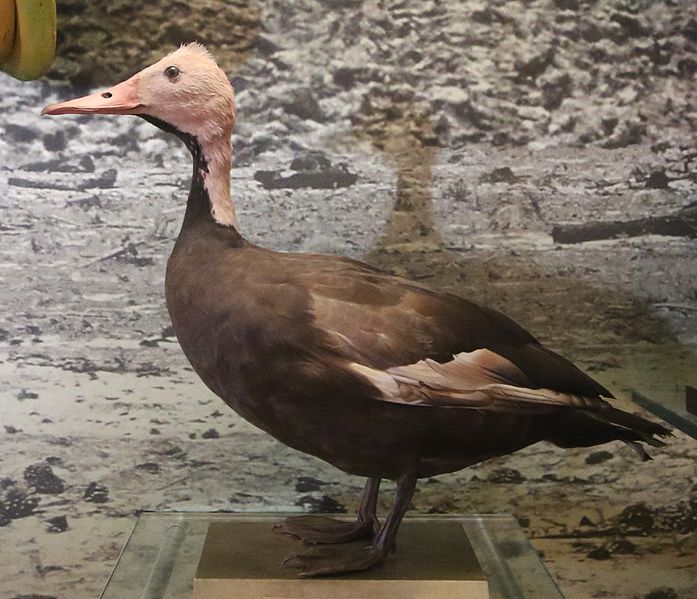
Enough about me, you're more likely here for the new maniraptor discoveries. In January, eggshell previously attributed to Genyornis was reinterpreted as belonging to Progura. Quill pits were reported from an Eocene penguin. The genome of the great tit was sequenced. Carotenoid-based feather coloration was found in pink-headed ducks. Great reed warblers were suggested to sing outside of the breeding season to practice their songs. Forty-spotted pardalotes were found to stimulate manna production in eucalyptus trees for feeding. New studies came out on body mass of dodos, the cranial biomechanics of moa, the kicking strike of secretary birds, vocal learning in zebra finches, and the evolution of bill length in 'amakihi, melanin-based coloration system in birds, and chromosomes in white-throated sparrows. Newly-named maniraptors included the non-ornithothoracine avialan Chongmingia zhengi, the Eocene stem-falcon Antarctoboenus carlinii, the enantiornithine Linyiornis amoena, the Cretaceous euornithines Dingavis longimaxilla (which I find suspiciously similar to Juehuaornis) and "Bellulia" rectusunguis (with its genus preoccupied, it would receive a new name later in the year), and the Himalayan forest thrush (Zoothera salimalii).

Mounted specimen of a pink-headed duck, photographed by "Geni", licensed.

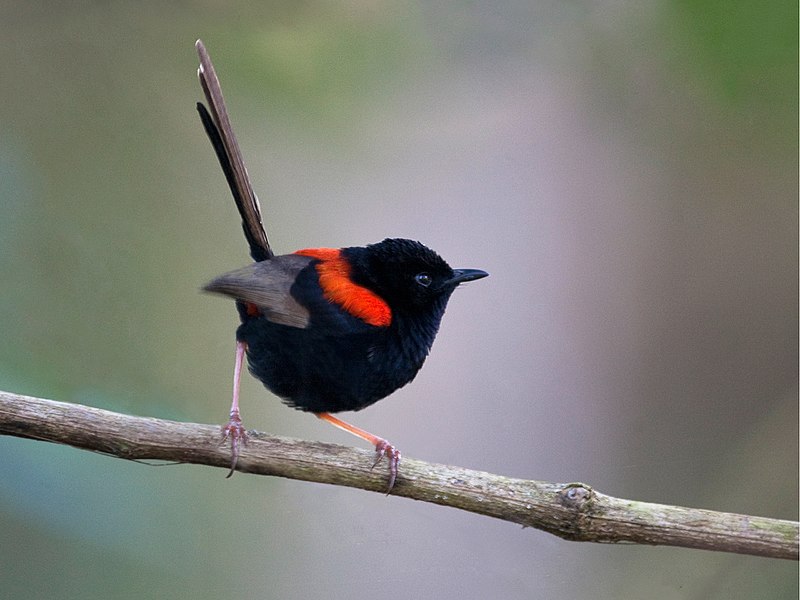
In February, duetting in red-backed fairy wrens was found to deter cuckoldry (among themselves, not among their listeners...). Evidence for a theory of mind in common ravens was presented. A specimen of Hesperornis was found with injuries attributed to a plesiosaur attack. New specimens of Archaeorhynchus and Chambicuculus were described. "Furculae" assigned to Dakotaraptor were reinterpreted as turtle entoplastra. New studies came out on the development of fibular reduction in birds, the endocranial anatomy of dodos, the evolution of sexually dimorphic tail feathers, the feather structure of Humboldt penguins, and sound recognition in European starlings. Newly-named maniraptors included the presbyornithid Wilaru prideauxi, the dromornithid Dromornis murrayi, and a bizarre possible maniraptor of uncertain placement, Fukuivenator paradoxus.

Red-backed fairy wren, photographed by Greg Miles, licensed.

In March, brown skuas were reported to be capable of recognizing individual humans. Compositional syntax was found in the calls of great tits. The bill morphology of New Caledonian crows was shown to facilitate tool use. Vocal learning was discovered in red-backed fairy wren embryos. New studies came out on the evolution of color in island birds, the development of feathered feet in domestic chickens and pigeons, the migratory biology of ruby-throated hummingbirds, the vision of small passerines, the morphology of dodos, the mandibular anatomy of Segnosaurus, the tarsometatarsal anatomy of ostriches, the mechanics of sound production in the wings of Smithornis broadbills, and the phylogenetic position of Sylviornis. Newly-named maniraptors included the Cretaceous euornithines Hesperornis lumgairi and Changzuiornis ahgmi, the Eocene apodiform Cypseloramphus dimidius, and an Eocene bird of uncertain placement, Lapillavis incubarens.

Skeletal reconstruction of Sylviornis, from Worthy et al. (2016).

In April, island birds were found to predictably evolve decreased flying ability. Golden-collared manakins and red-capped manakins were discovered to use superfast forelimb muscle contractions during social displays. Vocal mimicry in female superb lyrebirds was reported. The reproductive biology of the sapayoa was described. A new enantiornithine specimen was found to have fish remains as gut contents. New studies came out on the rates of morphological evolution in Early Cretaceous birds, the effect of diet on avian evolution, the taxonomy of geranoidids from the Willwood Formation, the migration strategies of pied flycatchers, brain activity during flight in European starlings, self-regulation in corvids, dental disparity in paravians prior to the K-Pg, the genetic basis for beak size in Darwin's finches, the history of Australian penguins, the biomechanics of courtship displays in Indian peafowl, the evolution of skull shape in raptorial birds, and the ontogeny of limb kinematics in chukars. Newly-named maniraptors included the oviraptorosaur Apatoraptor pennatus and the plotopterids Klallamornis abyssa and Olympidytes thieli.

Red-capped manakin, photographed by Francesco Veronesi, licensed.

In May, the genetic basis for red coloration in birds was described. Research on the phylogeography of the vermilion flycatcher species complex resulted in the recently-extinct San Cristóbal vermilion flycatcher being declared a distinct species. The bill of southern yellow-billed hornbills was found to function in thermoregulation. Hybridization in geese was reviewed. New studies came out on the phylogeny of geese, the structural mechanics of the feather vane, polymorphism in black sparrowhawks, the pelvic limb musculature of ostriches, the evolution of bone-associated genes in birds, duetting displays in magpie larks, and the shape recognition in African gray parrots.

Diagram showing that the enzyme CYP2J19 converts yellow carotenoids to red carotenoids in birds, from Lopes et al. (2016).

In June, wings of juvenile enantiornithines were found preserved in amber. Sexual dimorphism was found in Dromornis stirtoni. Birds were discovered to have higher neuronal density in their forebrains than mammals. Budgerigars and zebra finches were reported to learn grammatical structure in different ways. New studies came out on cognitive development in kaka, the function of nocturnal song in field sparrows, the genetic bases of beards and muffs in chickens, the vascular anatomy of bird heads, the evolution of communal signaling in birds, the chemistry of Troodon tooth enamel, and the osteology of Bathornis. Newly-named maniraptors included the lithornithid Calciavis grandei. "Bellulia" rectusunguis was given the new genus Bellulornis.

Wing of juvenile enantiornithine preserved in amber, from Xing et al. (2016).

In July, great frigatebirds were found to track atmospheric conditions during transoceanic flights. Feather keratin was suggested to be durable enough to be potentially fossilized. The capacity for flapping-based locomotion in Mesozoic paravians was evaluated. New Caledonian crows were reported to use tools for carrying objects. Relational concept learning was demonstrated in ducklings. New studies came out on the consumption of blister beetles by male great bustards, the preservation of avian fossils, visual pigments in emus, interspecies communication between greater honeyguides and humans, visual guidance of flight in hummingbirds, genomic variation in Darwin's finches, and the evolution of ultraviolet vision, closed-mouth vocalizations, skull morphology, and locomotion in birds. Newly-named avialans included the Pleistocene cuckoos Centropus bairdi and Centropus maximus and the Miocene gypaetine vulture Mioneophron longirostris.

Ducklings imprinted on a set of differently-shaped objects (A) prefer a novel set of differently-shaped objects over a novel set of identically-shaped objects (C), whereas ducklings imprinted on a set of identically-colored objects (B) prefer a novel set of identically-colored objects over a novel set of differently-colored objects (E)... though sometimes mistakes are still made (D), from Martinho and Kacelnik (2016).

In August, tool-bending behavior was found to be common in New Caledonian crows. Great frigatebirds were confirmed to sleep in flight. Barbados bullfinches and Carib grackles were discovered to be capable of passing the string-pulling test. The evolution of avian reproduction was reviewed. Zebra finches were found to sing to their unhatched chicks to prepare them for hot weather. New studies came out on the phylogenetic position of the laughing owl, the timing of the crown-penguin radiation, genomic variation in the yellow-rumped warbler species complex, and the diversification of kiwis and passerines. Birds of Stone by Luis Chiappe and Meng Qingjin was published and my review of it can be found here.

Great frigatebird, photographed by "Aviceda", licensed.

In September, pigeons were found to be able to distinguish words from non-words. They were also found to prefer informative over non-informative options and to ignore misinformed leaders. The development of feathers was reviewed. Tool use was reported in Hawaiian crows. Melanin in feathers was elementally characterized. A hard polytomy was argued to be present at the root of Neoaves. Pellets possibly produced by Eocene owls were described. European blackbirds were discovered to switch abruptly to nocturnal flight during migration. New studies came out on the phylogeny of New World vultures, the function of nasal conchae in turkeys, non-vocal signaling during courtship displays in blue-capped cordon bleus, song complexity in pied butcherbirds, the genetic bases for vision in raptorial birds, the morphology of tracheal and esophageal displacement in birds, the development of the grasping foot in birds, and the dentitions of Hesperornis and Ichthyornis. Newly-named maniraptors included the Eocene stem-roller Septencoracias morsensis, the Dahomey forest robin (Stiphrornis dahomeyensis), the Ghana forest robin (Stiphrornis inexpectatus), and the Rudder's forest robin (Stiphrornis rudderi).

Hawaiian crow using stick as probing tool, from Rutz et al. (2016).

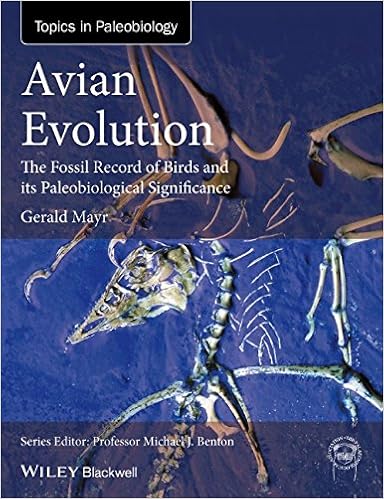
In October, red flight feathers in yellow-shafted flickers was found to be caused by diet rather than by hybridization with red-shafted flickers. A preserved syrinx was reported from a specimen of Vegavis. A bonebed of Avimimus was described at last after having been rumored at conferences for many years. Evidence was presented in favor of treating the hen harrier and northern harrier as distinct species. A parrot fossil was reported from the Miocene of Russia. Common swifts were discovered to spend ten months in the air annually. Migratory life histories were found to explain the extreme size dimorphism in Eudyptes penguin eggs. New studies came out on altruism in azure-winged magpies, the relationships between flight style and avian wing aerodynamics, the timing of the columbiform radiation, the mechanics of plunge diving in sulids, and the evolution of the avian bill as a thermoregulatory organ. Newly-named maniraptors included the Pleistocene owl Bubo ibericus, the Eocene owl Eostrix gulottai, and the Eocene albatross Notoleptos giglii. Avian Evolution by Gerald Mayr was published and my review of it can be found here.

Preserved Vegavis syrinx, from Clarke et al. (2016).

In November, an immature enantiornithine specimen was inferred to have had iridescent feathers. Keratin preservation was reported in the claws of Citipati and the feathers of Eoconfuciusornis (alongside melanosomes in the latter case). A new estimate argued that there are around 18,000 species of extant birds. Goffin's cockatoos were reported to be capable of manufacturing tools out of different materials. The microstructure of an isolated feather from the Fur Formation was analyzed. Interhemispheric transfer of imprinting information was found to be absent in the brains of newly-hatched ducklings. New studies came out on the morphology of Chiappeavis, the evolution of avian breeding strategies, and the timing of the origins of avialans and neornithines. Newly-named maniraptors included the enantiornithine Monoenantiornis sihedangia, the oviraptorosaur Tongtianlong limosus, the Miocene galliforms Eurobambusicola turolicus and Mioryaba magyarica, and the zygodactylids Primozygodactylus longibrachium and Primozygodactylus quintus.

Holotype of Tongtianlong limosus, from Lü et al. (2016).

In December, laser fluorescence was used to study the soft tissues of Confuciusornis. A new juvenile specimen of Sapeornis was described, revealing dentary teeth to have been present in this taxon. "Liornis" and Callornis were reevaluated. Complexities in the evolution of avian flight were discussed. New studies came out on the flight parameters of Mesozoic avialans, the histology of cranial joints in mallards, the comparative morphometrics of Darwin's finches and Hawaiian honeycreepers, the evolution of avian genomes and paleognaths, the morphology of the jugal and quadratojugal in maniraptors, the relationships between body feather structure and habitat, and the influence of wing morphology on dispersal in corvoids. Newly-named maniraptors included the Cretaceous euornithine Tingmiatornis arctica.

Confuciusornis specimen photographed under laser fluorescence, from Falk et al. (2016).

This Mesozoic Month: December 2016

Happy new year! This month, after 90 installments over five years, Mesozoic Miscellany has evolved into a new form. The intent of these round up posts will be the same, but now they'll have a more fitting name: This Mesozoic Month. As the name implies, I plan on keeping to a monthly schedule so I can include fresher, and hopefully more, news of the mesozoical persuasion. 2016 ended with a bang, so let's see what made the rounds on blogs, podcasts, and the media.

In the News

Juvenile coeleurosaur by Chun-Tat Cheung, distributed with press materials for the Current Biology publication
The big news in December, and let's face it, 2016 as a whole, was the discovery of a fragment of a feathered theropod tail trapped in amber. With this specimen, we have physical evidence of how the tail feathers of non-avialans attached to the spine. It's the kind of paleontology story that hits the media with a big splash. I know I've had a few people ask me about the story, and not just on-line. Read more from Andrea Cau at Theropoda, Liz Martin-Silverstone at Musings of a Clumsy Palaeontologist, NatGeo, Daily Kos, The Verge, CNN, Science, Washington Post, New York Times, the Guardian, and NPR. As a nice little surprise, Brian Switek popped up on The Skeptic's Guide to the Universe to chat about this and more.

And that's not all we've received recently from Burmese amber. Also published this month was the discovery of an Aleocharine beetle dating back to 99 mya, almost doubling the previous oldest specimen of the family. These rove beetles are parasites of eusocial insect colonies, and this specimen is contemporaneous with the oldest known eusocial termite colony. Tidy! Read more from Entomology Today.

One of the happiest pieces of news in December was President Obama's creation of Bears Ears National Monument, protecting the vital paleontological resources within, and in part Robert Gay is to thank. Read his story on how he advocated for the protected status.

Body fossils of cephalopods are exceedlingly rare, but at Laelaps, Brian Switek has the story of a beautiful Jurassic octopus, Proteroctopus ribeti.

A biomechanical study of the skulls of Camarasaurus and Plateosaurus finds that the former was capable of stronger, more efficient bites, while the latter was adapted for closing its jaws quickly, suggesting that greater efficiency in feeding could be part of the story of how sauropods got so large. Read more from Jon Tennant at the PLoS Paleo Community blog.

More news from the prehistoric chomping beat: a new study finds that Didelphodon had the strongest bite force relative to body size of any mammal yet studied. Brian Switek tells all at Laelaps.

During the Turonian, the Earth was a freakin' sauna. At a North Pole that never got much colder than 57° F/ 14° C, a newly described bird called Tingmiatornis arctica dove for its dinner. Read more from the New York Times and Scientific Reports.

New research as part of the Chicxulub drilling program has found that soon after the great asteroid impact 66 million years ago, the phytoplankton Braarudosphaera and dinoflaggelate Thoracosphaera colonized the impact site. Read more from Sarah Kaplan at the Washington Post.

Around the Dinoblogosphere

Writing for the Inverse, Jacquelyn Ronson has penned a terrific paean to paleoart. She speaks with paleontologist Don Henderson, who recently worked with Bob Nicholls' famous "Double Death" piece, in which two mighty Carcharodontosaurus play tug of war with a sauropod. "For Henderson, bringing these extinct creatures back to life through art isn’t secondary to the science, it’s fundamental to it."

The Dinosaur Toy Blog recently reviewed a rather impressive - and pretty large - Amargasaurus figure.

Shaena Montanari was interviewed on the Female of the Species podcast, discussing her Dinosaur Doctors outreach efforts, writing science for Forbes, and more.

Rebecca Groom recently added a pretty awesome Ichthyosaurus enamel pin to the Palaeoplushies shop! Here's where to pick one up.

For Saurian's final Devlog of the year, the team shared their revised Triceratops sculpt and Chris Masna's design for Brachychampsa. I can't wait to play the game and hunt inadvisable prey animals.

At the PLOS Paleo Community blog, Tara Lepore writes a guest post about a gathering celebrating the role of women in the SVP at the Society's 2016 conference. She writes, "Especially enlightening was the idea that although women comprise roughly half of the SVP membership, women do not always tip the scales in terms of invited talks." I've linked to it before, but also be sure to read Victoria Arbour's post on this very topic at Pseudoplocephalus.

Poor, neglected Parksosaurus. Justin Tweet writes about the also-ran ornithopod at Equatorial Minnesota.

The large troodontid teeth that have been found on Alaska's north slope offer a tantalizing glimpse at a prehistoric environment in which relatively giant troodontids stalked snowy forests. Writing for Earth Archives, Pete Buchholz offers a great summary of what we know about the fauna of the Prince Creek Formation. Beautiful troodontid art by Julio Lacerda, as well.

Also at Earth Archives, Dean Lomax writes about the value of old museum collections to science. He tells the story of the description of Ichthyosaurus anningae, notable not only for being named for Mary Anning but for also being the first time we've possibly seen sexual dimorphism in an ichthyosaur species.

So, eight years ago, Cracked wrote an article that's pretty much Palaeofail 101, stuck hopelessly in the tar pit of awesomebroism. Responding to a recent reader question at Tumblr, Albertonykus ably and gleefuly dissects it. The original article may be an oldie, but the takedown is fun and informative.

At ART Evolved, Herman Diaz is back with a new pair of book reviews. this time, it's Dinosaurs and their Living Relatives and the unfortunately BANDit-friendly Outside and Inside Dinosaurs.

In a fascinating post at Waxing Paleontological, Zach delves into the silesaurids, providing great context for why Silesaurus was such a lil' weirdo in 2003 and how further discoveries since then have shaped our understanding of these critters.

Brian Engh has a brand new set of illustrations for the Bureau of Land Management, depicting the dinosaurs of the Copper Ridge tracksite near Moab, Utah. Brian's made another terrific video explaining the site and his thinking behind the sauropod trackmaker. Check it out at his site. Matt of SV-POW featured it, as well. Part 2, featuring the theropod trackmaker, will follow soon.

And speaking of tracks, it's "Name That Track!" The hottest ichnology-based game of the year, hosted by Lisa Buckley.

Mark Witton was one of the presenters at a recent workshop entitled Popularizing Palaeontology. At his blog, he expounds on one of the recurring themes of the event, concerning the positives and negatives of the long shadow dinosaurs cast over palaeontological outreach as a whole. His conclusions certainly line up with what I've observed in the instances when I've talked dinosaurs in public.

Crowdfunding Pick

This month, I'll suggest sending some support the way of Thagomizers, Scott Potter's video series that explores the intersection of science, art, and culture in how we understand dinosaurs. They've got a Patreon page for ongoing support, and they're getting close to one of their $20 monthly goal, which would allow for an Adobe AfterEffects subscription to help with production. If you've not seen any of their videos yet, here's one of their to show the quality of work.

Paleoart Pick

DeviantArtist Kirby, AKA KirbyniferousRegret, is building an impressive body of work. This recent Eoraptor family illustration is a masterpiece, with loving attention to textural detail.

Eoraptor Family by Kirby, used here with the artist's permission.

Follow Kirby's work on DeviantArt and Twitter. And remember, sweethearts: don't steal art!

Koh Gen Do Oriental Plants Lotion: A Must Have Beauty Product for Your Skin

*Post originally written by Olivia J on The Unknown Beauty Blog. If you see this post elsewhere, it has been stolen.*
*PR sample*


source: Koh Gen Do Japan

Before I explain why Koh Gen Doh Oriental Plants Liquid Lotion is important, let me take you back to my youth.  As a little girl, I spent my summers in Japan. Hot and humid summers which made me feel like an egg being poached in its shell. 

I beg you, click to read more »

Avian Evolution

For all its faults, 2016 was a good year for new science books, and in the comparatively narrow field of paleornithology a whopping number of two major titles were published. I previously reviewed one, Birds of Stone by Luis Chiappe and Meng Qingjin. As promised, here is my review of the other.


Avian Evolution is authored by Gerald Mayr, and I can think of few who are as qualified to cover the subject. Mayr is an incredibly prolific paleontologist known for his research on both Mesozoic and Cenozoic birds, and though I haven't crunched the numbers, he is singlehandedly responsible for a considerable amount of recent paleornithological literature.

Not even close to the entirety of Mayr's output.

After an introduction to avian osteology and relevant geological settings, the first few chapters of Avian Evolution discuss the Mesozoic evolution and diversity of birds, covering the anatomy of Mesozoic avialans and non-avialan pennaraptors, competing hypotheses on the origins of feathers and avian flight, and evolutionary trends leading to neornithines. Though the overview of the Mesozoic is very welcome, the most valuable part of this tome lies in the chapters following it. Whereas information on Mesozoic birds is no longer as difficult to come by as it used to be, there remain very few comprehensive reviews of the Cenozoic bird fossil record. Barring some lone chapters in larger volumes, previous syntheses of the subject have largely been... idiosyncratic in various ways, not to mention increasingly outdated. Mayr's previous work, Paleogene Fossil Birds, is excellent, but only covers Paleogene birds and is extremely expensive. (Avian Evolution is by no means cheap, but is still far more affordable by comparison.)

Given this dreadful situation, the sections on Cenozoic birds in Avian Evolution fill a much needed gap. These chapters are mostly arranged using a phylogenetic framework, insofar as uncertainties in neornithine phylogenetics allow, but a few clades are discussed alongside one another based on ecological similarities rather than close kinship (e.g.: the major groups of hypercarnivorous diurnal birds—accipitrimorphs, falconiforms, and cariamiforms—are covered in one chapter). The final chapter deviates from this structure and instead focuses on the unusual evolutionary trends and unique morphologies of island birds. The book is not confined to fossil taxa clearly closely related to modern forms, nor to the most charismatic extinct clades such as phorusrhacids and teratornithids, but, being a truly comprehensive review, also includes many enigmatic and obscure fossil groups like the eogruids (cursorial birds possibly closely related to cranes), diomedeoidids (procellariiforms convergently similar to oceanitid storm petrels), plotopterids (flightless diving birds of the northern Pacific), and zygodactylids (abundant stem-passerines with zygodactyl feet). For each avian group, the overall anatomy, known fossil record, biogeographic history, and possible paleoecology are all described, with areas in need of future research noted where necessary. One take-home message of this book is that much more work needs to be done on the phylogeny of Cenozoic fossil birds (which will no doubt be facilitated once we have a more stable topology for the extant representatives).

The book is well illustrated with phylogenetic trees, skeletal diagrams, and comparative photographs of specimens. A number of colored plates in the middle of the book display photographs of various spectacular specimens of fossil birds (and some non-avialan dinosaurs). Unlike Birds of Stone, Avian Evolution is not meant to be a pictorial guide and its images are accordingly much smaller, but they are nonetheless of high quality and helpfully supplement the text. Interestingly, a skeletal restoration of Jeholornis by Scott Hartman lacks a retractable second toe, unlike other (and presumably older) versions of this image that I've seen.

In addition to reviewing the primary literature, Mayr provides some observations that are to my knowledge novel or undescribed.
  • Like Chiappe and Meng in Birds of Stone, Mayr supports the proposed synonymy between Iteravis and Gansus zheni. (Unlike Birds of Stone, Mayr directly cites Mortimer for this suggestion.)
  • Alamitornis, originally described as a possible close relative of Patagopteryx, is suggested to be a squamate rather than a bird.
  • In light of the reinterpretation of "Genyornis" eggs as belonging to the megapode Progura, Mayr argues that purported castaway Aepyornis eggs found in Australia should be considered possible candidates for true Genyornis eggs.
  • Neogaeornis, a supposed Cretaceous loon, is considered to share more similarities with grebes.
  • Mayr points out that Paracrax, generally assumed to be a member of the carnivorous Cariamiformes, has a hoatzin-like sternum and may have had a large crop and herbivorous diet similar to that bizarre South American bird.
  • An undescribed London Clay stem-owl specimen, currently held in a private collection, has pieces of the skull indicating that it may have had smaller eyes than extant owls.

Particularly controversial will be Mayr's contention that pennaceous feathers most likely evolved for aerodynamic purposes. This main basis for his argument is that if pennaceous feathers were adaptations for non-aerodynamic functions (such as signaling), it would have been evolutionarily easier to widen the entire shaft rather than forming the complex branching structure of actual pennaceous feathers. Given current knowledge of feather growth, I'm not convinced that it would be developmentally easier to grow a flat sheet rather than adding branches to a feather, despite the structural complexity of pennaceous feathers. Additionally, the argument appears to disregard potential non-aerodynamic benefits of producing branching structures, such as more efficient distribution of material compared to equally-sized continuous sheets. Mayr also suggests that ancestral pennaceous feathers used for display purposes would more likely be sexually dimorphic, which appears to ignore the possible role of mutual sexual selection in ornithodirans (including modern birds).

Mayr points out that pennaceous feathers are generally reduced in flightless birds, attributing the presence of fully formed pennaceous feathers in flightless oviraptorosaurs and dromaeosaurids to potential secondary flightlessness. In particular, he levels the possibility of the small, possibly arboreal scansoriopterygids being close relatives of oviraptorosaurs in support of a volant ancestry for the latter. However, given the many aberrant characteristics of scansoriopterygids, not least of which is the fact that at least some of them appear to have flown or glided using membranes rather than feathers as their primary lift-generating surfaces, I am skeptical that they are particularly informative to oviraptorosaur ancestry even if this phylogenetic hypothesis was correct. In any case, the possibly unusual wing structure of the scansoriopterygids likely makes their relevance to the origin of pennaceous feathers questionable. Though I find it plausible that early pennaceous feathers were used in some form of locomotory behavior (such as increasing maneuverability while running and leaping), I would await more conclusive evidence of secondary flightlessness in non-avialan pennaraptors before declaring aerodynamics to be the most likely explanation for the origin of pennaceous feathers.

I defer to Mayr's knowledge of Cenozoic birds, but I did spot a few minor errors or debatable claims in the Mesozoic chapters besides the discussion of pennaceous feather origins.
  • Avimimus is presented as being of uncertain phylogenetic position, even though it is almost invariably recovered as an oviraptorosaur by recent analyses. (Its position within Oviraptorosauria, on the other hand, is less secure.)
  • A specimen of Baptornis is said to preserve coprolites, but this specimen has been given the new name Fumicollis. (Inexplicably, Fumicollis is mentioned elsewhere in the book.)
  • On a taxonomic note, it is said that affirmation of a close relationship between oviraptorosaurs and scansoriopterygids would make oviraptorosaurs paravians, yet all common definitions of Paraves explicitly exclude oviraptorosaurs. Instead, scansoriopterygids would no longer be considered paravians under such circumstances.
  • Caudipteryx is put forth in support of rectrices being restricted to the tail tip in ancestral pygostylians. Though I concur that it's likely that this was the case for Pygostylia, the presence of rectrices down most of the tail's length in the oviraptorosaur Similicaudipteryx, the dromaeosaurid Zhenyuanlong, the troodont Jinfengopteryx, and the basal avialan or troodont Anchiornis suggests that Caudipteryx may not represent the ancestral condition further down the tree.
  • Lastly and almost inevitably, there are a few typos throughout the text. Most glaringly, a strict consensus tree of neornithine relationships incorrectly shows secretary birds as being more closely related to New World vultures than to accipitrids, likely due to mislabeling of the branches.

Despite these lapses, Avian Evolution is impressively up to date and even cites references from early 2016, including the description of Dingavis and the aforementioned reidentification of "Genyornis" eggs. (However, Chiappeavis is strangely not mentioned as an example of an enantiornithine with a fan-shaped arrangement of tail feathers, even though Feitianius, which was described at around the same time, is.)

This book is part of the Topics in Paleobiology series, a collection of volumes intended to serve as reviews of the primary literature on specific topics in paleobiology for researchers and advanced students. This installment succeeds admirably in my view, being sufficiently technical and comprehensive to synthesize its main topic but helpfully defining specialist terms for those unfamiliar with the specific subject. Think The Complete Dinosaur rather than The Dinosauria in terms of style and level of detail. An extensive bibilography is provided for readers who wish to pursue the discussed topics even further. Avian Evolution is an indispensable review and index to the current literature on fossil birds and I would strongly encourage all academics and well-read laypeople interested in the subject to obtain a copy. Its synthesis of Cenozoic paleornithology alone should secure its place in any paleontological library.

I'm certainly glad that Topics in Paleobiology decided to produce such an essential title. I wonder what else- hold on, what!?

Thanks to this review taking up most of my time, I have not been able to complete my annual retrospective of the previous year's events punctually, but it will be coming up next...

A Yearly Plan for Self-Evaluation and Personal Improvement©

Introduction: It is common at the beginning of each year to make "New Year's Resolutions." I've never been consistent at that, nor good at it. I am resolved to do better.  Below is the yearly plan developed by an Apostle of the Lord, Elder L. Tom Perry. One could do worse than this simple but thoughtful plan for self-evaluation and ongoing improvement. I share it with you for your personal inspiration and motivation.  Happy New Year.

****
In conclusion, let me tell you about a personal planning cycle I developed about the time that I was ending my formal education, with the hope that it will cause you to seriously reflect and plan the future. I was a little older than most when I graduated from college; a mission and World War II had slowed the process. I graduated from college just a few months before my twenty-seventh birthday. I was married, and the first child was on its way. Family responsibility has a special way of bringing a maturing process. I decided if I was to accomplish my life's objective I needed to form a plan and review my performance regularly against the determined plan. My decision was that I would hold an annual review on each of my birthdays to evaluate my progress. On my twenty-seventh birthday my first plan was prepared. On my twenty-eighth birthday I made my first annual performance evaluation and plan revision. This I have carried out each year until the present. The plan includes the same ingredients we have discussed here tonight. First, a physical plan: it is near my birthday each year that I go to the doctor and have an annual physical examination. My plan includes some established goals for an active and restive pulse rate, a blood pressure reading, and a weight range. Annually I check my performance in my physical plan.  
My physical plan also includes a financial plan. I wanted to have thirty years of accumulation where I could become financially independent. My plan at the end of those thirty years was to be in a position where I could call the shots, be flexible, do what I wanted to accomplish. I would be able to fill a second mission, or to devote my time to community service or education. Each year I would prepare a personal balance sheet to evaluate my progress toward achieving this objective. 
Second, I would evaluate my relationships with my wife, my children, my friends, and my business associates. I was continually asking the question, "What kind of an influence in the world am I for teaching righteous principles?" I wanted to be balanced socially and emotionally.  
Third, I established a study program to improve my mind. I would mark a calendar each year with my study objectives of how many chapters I would read each day in a 365-day year. I am afraid that in my early years I was moving too much toward the objectives of my professional life. Now my program has changed, because I have discovered the great value of the scriptures. My program now is to read two chapters in the scriptures first thing every morning. By so doing I can cover the Book of Mormon, the Pearl of Great Price, the Doctrine and Covenants, and the New Testament each year.   
Fourth, each year I gave myself a very careful temple worthiness interview. I would ask myself the questions, "Am I morally clean?" "Do I live the Word of Wisdom?" "Am I honest in paying my tithes and offerings?" "Am I regular in my attendance at my priesthood and sacrament meetings?" "Am I keeping my life in harmony with the principles of the gospel?" "Do I sustain my stake president?" "Do I sustain the prophet of the Lord?" "Is my testimony of the Lord and Savior vital, alive, and an active force in my life?" This process has had me focusing in a special way each year on what I wanted to accomplish within the time allotted to me in my mortal experience. Each year I would feel the thrill of accomplishment, but more strongly the determination to do better.(1)
Let's think together again, soon.

Notes:

1.  L. Tom Perry, “‘I Need Thee Every Hour,’” 1977 Devotional Speeches of the Year, (Provo, UT: BYU Press, 1978), p. 8.

The New Year of 2017: Year of the Chook and True Beauty

*Post originally written by Olivia J on The Unknown Beauty Blog. If you see this post elsewhere, it has been plagiarized.*


Or the year of the cock! Happy New Year!!! I am so glad 2016 is gone.  I do hope 2017 is better.  For this blog, I think the only way it will continue is to change it a bit.
I beg you, click to read more »